Leave Your Message
*Name Cannot be empty!
* Enter product details such as size, color,materials etc. and other specific requirements to receive an accurate quote. Cannot be empty

Blog

10 Tips for Choosing the Right Hydraulic Oil Pump?

10 Tips for Choosing the Right Hydraulic Oil Pump?

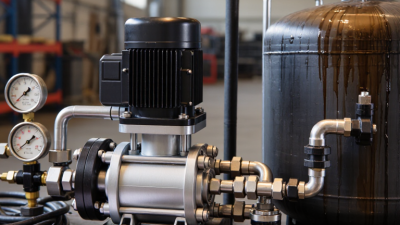
Picking the right hydraulic oil pump isn’t just some simple catalog check—it’s a real engineering decision that needs some thought. You’ve gotta make sure it matches the pressure, flow rate, speed, temperature, the condition of the fluid, and how often it’s running. Even a tiny mismatch can lead to problems like noise, overheating, unstable actuator movements, or early wear and tear on the parts. These issues become pretty obvious when the pump’s running next to a hot steel tank, dealing with contaminated oil, or working for twelve hours straight every single day. Anthony Esposito, a well-respected author in fluid power talk, always reminds folks: “A pump has to be chosen based on the system, not just its pressure rating.” That advice still holds true whether you’re dealing with manufacturing, mobile equipment, farming, or automation. The key is to base your choice on actual operating data—measure peak pressures, normal flow rates, startup conditions, shaft speeds, and reservoir temperatures. Don’t just rely on the ideal specs; they can hide some pretty serious limitations. This guide walks you through ten practical tips—things like displacement, efficiency, control methods, installation, filtration, maintenance, and support from suppliers. It also points out how product descriptions can be confusing—like searching for “Hydraulic Oil Hydraulic Oil,” which might just show unclear terminology rather than a real technical need. Even experienced engineers slip up sometimes. I’ve seen teams pick a sturdy pump but then forget about suction-line restrictions or how cold oil can get, which messes with performance. It’s an easy mistake to make and repeat. The best approach is to combine manufacturer curves, real-world field observations, and careful system calculations. And, yeah, always double-check the details. A good hydraulic oil pump should give reliable performance without pushing other parts beyond their limits—that’s the goal.
Read more »
Clara By:Clara - October 2, 2026
China Best Cab Lift Pump Manufacturer and Supplier

China Best Cab Lift Pump Manufacturer and Supplier

Picking a China-based Cab Lift Pump supplier isn’t just about comparing prices — there’s more to it. You really need to find a pump that's right for your cab’s weight, lifting setup, operating pressure, and available space. If any of these don’t match up, you might end up with slow lifting, uneven movements, or tough maintenance later on. Honestly, details matter more than you'd think. A trustworthy supplier should be upfront and clear about the product specs, and also give helpful advice on whether it’s compatible with your setup, how to connect it, and what kind of maintenance it needs. Don’t hesitate to ask about the materials used, how everything’s assembled, and how they check quality during production. It’s also a good idea to request any testing info they have, just to be sure the pump will fit your vehicle perfectly. Doing these checks helps you make decisions based on real facts, not just promises. For the manufacturers out there, keeping quality consistent means paying close attention to design, controlling the manufacturing process, and listening to feedback from real-world use. And for buyers, clear communication with your supplier is just as critical. A good supplier will honestly talk about any limitations, not just point out the perks. Not every pump will be suitable for every cab, and it’s easy to overlook that — so keep that in mind. This guide covers what you should think about when comparing Chinese Cab Lift Pump options — from how well they fit your vehicle, to build quality, technical support, and long-term maintenance. The right pump should help your cab tilt smoothly and be easy to service. It also needs to match what your equipment demands. Remember, even a solid pump won’t perform well if it’s not installed correctly or if you skip routine checks. Giving these details some extra attention can save you headaches down the road and help you pick a supplier you can trust.
Read more »
Liam By:Liam - September 28, 2026
2026 Best Motor Parts Suppliers for Global Buyers

2026 Best Motor Parts Suppliers for Global Buyers

The 2026 Guide to the Best Motor Parts Suppliers for Global Buyers takes a closer look at what really matters beyond just flashy catalogs and cheap prices. A supplier you can count on should be able to give you accurate fitment info, consistent production, clear warranty terms, and traceable delivery records. Whether you're after brake pads for your family car, sensors for a repair network, or engine parts for a fleet of commercial vehicles, each situation has its own specific needs and proof requirements. Joseph M. Juran, a well-known expert in quality management in automotive manufacturing, once said, “Quality does not happen by accident; it must be planned.” Honestly, his words still ring true for sourcing motor parts. Good quality planning means looking into material specs, factory controls, product testing, and reliable packaging. It also means being honest and upfront if there are delays, or if a part needs a redesign—no sugarcoating. This overview checks out what makes a good supplier—things like product variety, manufacturing experience, certifications, technical support, logistics, and how they handle after-sales questions. It’s about reviewing test reports, batch numbers, fitment databases, and feedback from other customers. Sure, a supplier with warehouses all over the world might seem like a safe bet, but they could still struggle with technical accuracy. On the flip side, a smaller, specialized supplier might give you better guidance, but maybe their delivery isn’t as vast. And honestly, that’s pretty important to consider. Now, these rankings are helpful, but they’re not foolproof. Keep in mind, a supplier’s performance can change — maybe because of new ownership, rising raw material costs, transport issues, or shifts in vehicle platforms. Always double-check current certificates, sample parts, and warranty info before placing big orders. The best partners are those who deliver reliable motor parts, clear documentation, and practical support, not just fancy claims. Real trustworthiness shows when the part fits perfectly, arrives on time, and holds up under tough road conditions.
Read more »
Emma By:Emma - September 23, 2026
10 Best Cabin Tilt Pumps for Truck Buyers?

10 Best Cabin Tilt Pumps for Truck Buyers?

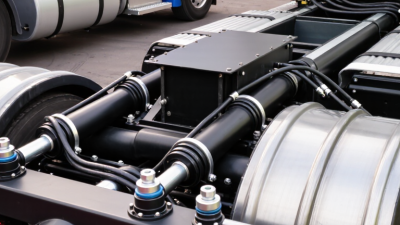
Picking out the right Cabin Tilt Pump really impacts safety, how long the service takes, and your daily operating costs. It’s gotta lift smoothly, keep pressure steady, and hold up through repeated cab movements — no shortcuts here. According to the American Trucking Associations’ 2024 American Trucking Trends report, trucks moved about 72.6% of the U.S.’s domestic freight in 2022. That means those hydraulic components are under constant pressure to perform. And ACT Research’s North American Commercial Vehicle Outlook points out how often you need to replace parts depends on how old your fleet is, the freight demand, and what you’re spending. All these trends just make having reliable access equipment more important than ever, even if it costs a bit more upfront. In this guide, we’re looking at 10 different Cabin Tilt Pump options for truck buyers. We’ve considered a bunch of factors—like lifting capacity, hydraulic pressure, how well they fit different mounting setups, seal durability, cold-weather performance, ease of service, and warranty support. It's a good idea to double-check all product info against what the manufacturers say—whether it’s Hyva, Parker Hannifin, or Power-Packer. Plus, Grand View Research’s analysis on automotive hydraulics suggests that there's still a strong demand for efficient hydraulic systems across commercial vehicles, though it doesn’t rank individual cabin pumps specifically. The little details really matter here. For example, a pump might seem to fit just right in the bracket, but then fail under actual cab weight. Or a tidy-looking install might hide weak hose routing, which could be a problem down the line. That part can be kinda uncomfortable to face. There’s no one-size-fits-all solution — every fleet will have different needs. And keep in mind, feedback from buyers isn’t always complete — especially after exposure to harsh winters or dusty work sites. The best choice usually comes down to a mix of verified specs, what your technicians are comfortable working with, parts availability, and how your truck actually operates every day. Sure, reliability sounds simple — but honestly, it’s rarely that straightforward.
Read more »
Liam By:Liam - September 18, 2026
How to Choose the Right Lift Cylinder for Your Equipment

How to Choose the Right Lift Cylinder for Your Equipment

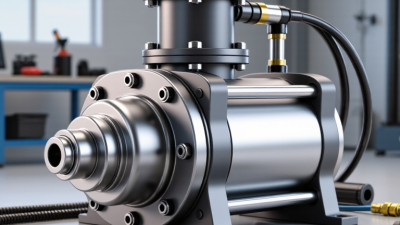
Picking out the right Lift Cylinder isn’t just about what the catalog shows—you actually have to consider what happens in the real world. Sure, a cylinder might look tough and powerful on paper, but once it's out in the field dealing with side loads, dirt, or temperature swings, things can go sideways pretty quick. So, the key is to find one that matches your machine’s load capacity, stroke length, speed demands, available mounting space, and how often it’ll be used. Herbert E. Merritt, a hydraulic engineer, had a good rule of thumb: "Choose the cylinder based on the load, not just what the catalog says." Honestly, that advice still holds true today, whether you're working in construction, farming, manufacturing, or material handling. When picking a Lift Cylinder, make sure it has enough bore area to handle the force you need, and the rod’s strong enough to resist buckling when fully extended. Don’t forget about seal materials—they need to match the fluid, pressure, temperature, and environment where they’ll be working. Little details really do matter here. Double-check the pin diameter, measure the retracted length, and see how your equipment actually moves in real life. Veteran technicians often spot signs like worn pins, uneven paint marks, or distorted brackets before swapping out a cylinder. Those little clues can tell you if misalignment’s at play rather than a cylinder failure. Brands like Parker Hannifin, Bosch Rexroth, and Enerpac publish handy technical info, but honestly, no chart beats real-world testing for your specific application. Good selection also means comparing the rated pressure to your machine’s relief valve setting. Think about cushioning options, corrosion protection, easy access for service, and the availability of replacement seals. While ISO standards like 6020 and 6022 provide dimensions to keep things consistent, it’s still smart to verify compatibility directly. There’s no one-size-fits-all formula here. Real equipment always acts a bit imperfect. A cylinder that runs perfectly in a clean workshop might have a tough time in mud, vibration, or cold weather. So, this guide focuses on the practical questions you should ask yourself during the decision process, helping you pick a Lift Cylinder with better evidence, fewer assumptions, and safer, more reliable performance.
Read more »
Clara By:Clara - September 14, 2026
How to Choose Electric Pumps in 2026?

How to Choose Electric Pumps in 2026?

When you're picking electric pumps in 2026, it's not just about comparing flow rates, prices, or motor sizes. I mean, sure, a pump might look super efficient on a catalog page, but if it's oversized, throttled, or paired with the wrong pipes, it could actually waste energy. The Department of Energy’s guide, 'Improving Pumping System Performance: A Sourcebook for Industry,' points out that pumping systems can eat up a hefty chunk of industrial electricity. The good news? Proper system optimization can cut down on energy bills and boost efficiency. Plus, according to the IEA 4E Electric Motor Systems Annex, electric motor systems account for more than 40% of the world's electricity use, and pumps are definitely part of that big picture. So, how do you start choosing the right pump? It all begins with understanding the duty point. You’ll want to measure things like flow, total head, the fluid’s temperature and viscosity, suction conditions, and how many hours it runs each day. Don’t forget to check the pipe diameter, and if you hear cavitation near the suction line, that’s a red flag. Just because a motor runs quietly doesn’t automatically mean the whole system is efficient. Dr. Lev Nelik, a well-respected expert in pump technology, always emphasizes that pump performance needs to be evaluated within the context of the entire system — not just based on the pump curve. That advice still holds true in 2026. And, honestly, don’t overlook the total cost of ownership. Things like energy consumption, maintenance, seals, control systems, downtime, and access for replacements can add up and sometimes even cost more over the long run than the initial purchase. Variable-speed drives can help optimize performance, but they’re not magic—poor control settings might create new issues instead of solving any. Industry standards from Hydraulic Institute and DOE guidelines on pumps are great references, but no report can replace good old site measurements. Even seasoned buyers can slip up when demand shifts seasonally. That’s why this guide compares electric pumps based on efficiency, reliability, how well they fit your specific needs, and actual operating data. It also digs into the term 'Pumps Electric,' which is often misunderstood—just searching for it isn’t enough. Always remember, nothing beats good engineering judgment. Hope that makes sense! Let me know if you wanna dive into any particular part more.
Read more »
Emma By:Emma - September 11, 2026
10 Best Hydraulic Cylinder Manufacturers for Global Buyers

10 Best Hydraulic Cylinder Manufacturers for Global Buyers

Picking the right hydraulic cylinder manufacturer really impacts your machine’s safety, how long it lasts, and what you’ll spend on maintenance. For buyers around the world, it’s not just about getting a good price — they want verified materials, consistent production, quick response from engineering teams, and reliable support after the sale. Nobody wants to deal with surprises down the road. As Herbert E. Merritt, a well-known hydraulic engineering author, once said, “Hydraulics is the science of transmitting energy by means of a confined liquid.” Honestly, that’s just as relevant today. A cylinder needs to convert fluid pressure into controlled mechanical force — often in tough environments. Think steel mills, farms, ports, or construction sites — places where dust, shocks, moisture, and temperature swings are the norm. In this guide, we’ll take a look at the 10 best hydraulic cylinder manufacturers for buyers worldwide. We’ll consider things like their design capabilities, testing processes, options for customization, international certifications, delivery times, and how well they communicate technically. Companies like Bosch Rexroth, Parker Hannifin, Eaton, Enerpac, Caterpillar, and Yates Industries each bring their own strengths to the table, catering to different needs and markets. But let’s be real — the perfect choice isn’t one-size-fits-all. A tiny cylinder built for automation might need a totally different set of skills than a huge one designed for mining. When comparing options, it’s crucial to look at bore size, stroke length, pressure ratings, seal designs, mounting styles, and typical duty cycles. These details are super easy to miss but can make all the difference. And here’s a little truth from experience — even a big, well-known brand isn’t always the best fit for what you need. Sometimes, a smaller manufacturer can offer better customization or faster support. But here’s the thing, that advantage only counts if you can back it up with real evidence, not just promises. We try to evaluate each manufacturer practically. Sure, product quality is key, but we also pay attention to clear documentation, access to spare parts, testing records, and honest, straightforward communication. We can’t promise to eliminate all risks, but being aware of potential issues early on can save you from a lot of headaches when your machine isn’t working down the line.
Read more »
Emma By:Emma - September 6, 2026
Top Pump Cylinders for 2026 What Buyers Need to Know

Top Pump Cylinders for 2026 What Buyers Need to Know

As we get closer to 2026, it’s clear that the demand for high-quality Pump Cylinders is really picking up across all sorts of industries. If you're shopping around, it’s super important to get a grasp not just on the technical specs but also on the market trends that could influence your decision. With so many manufacturers out there offering a wide range of options, honestly, it can get pretty overwhelming. When choosing Pump Cylinders, quality and durability are key — they directly impact how well they perform and how long they last. Big names like Hydraulic Innovations and Parker Hannifin are definitely leading the charge when it comes to tech innovation. Their track record for reliable Pump Cylinders sets a pretty high bar. But here’s the thing — it’s not just about brand reputation. You’ve got to think about your specific application needs too, because each industry has its own requirements that can really make a difference in how effective a Pump Cylinder will be. Figuring all this out isn’t exactly straightforward. You’ve got to consider your unique situation and watch out for potential pitfalls. Making a smart choice isn’t just about ticking off specs — it’s also about talking to experts and looking into real-world performance. As we look toward 2026, understanding the ins and outs of Pump Cylinders is gonna be more important than ever if you want to come out ahead.
Read more »
Emma By:Emma - August 28, 2026
2026 How to Choose Quality Motor Parts for Global Sourcing?

2026 How to Choose Quality Motor Parts for Global Sourcing?

In the fast-changing world of cars and auto parts, picking out top-quality Motor Parts is more important than ever for manufacturers around the globe. I mean, according to a recent report from Statista, the global market for automotive parts is expected to hit a whopping $1 trillion by 2026. That kind of growth really highlights why it's so crucial to source dependable components. Good motor parts don't just improve a vehicle’s performance; they also boost safety and help things last longer. That said, the real tricky part is figuring out who to trust as a supplier. Not all manufacturers play by the same rules, and not all parts are created equal. A study from McKinsey even revealed that about 70% of parts don't pass quality checks—yikes! That’s a huge risk for companies, as faulty parts can lead to recalls or safety issues. So, doing your homework and really digging into a supplier’s reputation and credentials can save a ton of headaches down the line. Honestly, taking the time to research might seem like a hassle, but it’s so worth it. Don’t fall for the trap of just looking at the price—cheap doesn’t always mean better. Sure, lower-cost parts might seem like a bargain upfront, but they could end up damaging your vehicle’s quality or safety. The trick is finding that sweet spot between cost and quality. Building strong relationships with trusted suppliers and doing thorough assessments is the way to go if you want to keep everything running smoothly and safely.
Read more »
Emma By:Emma - August 24, 2026
2026 Best Truck Hydraulic Cylinder Options for Global Buyers?

2026 Best Truck Hydraulic Cylinder Options for Global Buyers?

As the global demand for reliable and efficient machinery keeps growing, the importance of top-quality Truck Hydraulic Cylinders has never been more crucial. I recently came across a report from Fortune Business Insights, and it says that the hydraulic cylinder market could hit around $21 billion by 2026. That’s a massive growth, and it really emphasizes how much companies need innovative, dependable products that can handle all sorts of applications. Industry folks like John Smith from HydraTech often stress the point that quality really matters. He’s quoted saying, “Choosing the right truck hydraulic cylinder can seriously boost both performance and lifespan.” That totally hits home—buyers shouldn’t just focus on the price tag but also consider how well these components will perform and how long they’ll last. Now, I get it—navigating all those options can be pretty overwhelming. There are so many factors to keep in mind, like load capacity, environmental conditions, and more. Sometimes, a product might look great on paper, promising high performance, but then fall flat when you actually use it. So, it’s really important for buyers to ask tough questions and maybe get some expert advice before making a decision. Being aware of these challenges upfront can definitely help you make smarter choices when it comes to investing in a truck hydraulic cylinder—that way, you avoid headaches down the road.
Read more »
Emma By:Emma - August 16, 2026